 ®
®MedsRX Guide
The GLP-1 Guide: Semaglutide vs. Tirzepatide
How these medications work, what the published trials measured, side effects listed in the FDA labeling, dose titration up and down, and the whole-food, high-protein, strength-training foundation underneath it all.
Free • 14 sections • Sources cited
Information only — not medical advice
This guide is general health information compiled from published clinical trials and FDA-approved prescribing information. It is not medical advice, not a treatment recommendation, and not a substitute for evaluation by a licensed clinician. MedsRX is not a pharmacy and not a medical practice; it does not prescribe, dispense, or dose medication. Decisions about starting, escalating, reducing, or stopping any medication belong to you and your licensed prescriber. If you have a medical emergency, call 911.
Personalized Weight Loss Backed by Science
Based on average GLP-1 clinical outcomes of ~14.66% total body weight reduction. Individual results vary.
Section 1
What GLP-1 Medications Are
GLP-1 (glucagon-like peptide-1) is a hormone released by cells in the small intestine after eating. It stimulates insulin release when glucose is elevated, suppresses glucagon, slows how quickly the stomach empties, and signals satiety in the hypothalamus and brainstem. Native GLP-1 is broken down within minutes by the enzyme DPP-4.
GLP-1 receptor agonists are engineered peptides that resist that breakdown, so a single weekly injection maintains receptor activity for days. Semaglutide (marketed as Ozempic and Rybelsus for type 2 diabetes and Wegovy for chronic weight management) is a GLP-1 receptor agonist. Tirzepatide (Mounjaro for type 2 diabetes, Zepbound for chronic weight management) is a dual agonist: it activates both the GLP-1 receptor and the GIP (glucose-dependent insulinotropic polypeptide) receptor.
- Mechanism, per the approved labeling: increased glucose-dependent insulin secretion, reduced glucagon, delayed gastric emptying, and reduced appetite and food intake.
- Both are once-weekly subcutaneous injections given in the abdomen, thigh, or upper arm, on the same day each week, with or without food.
- Both are approved as adjuncts to a reduced-calorie diet and increased physical activity — the trials that produced the weight-loss numbers all included lifestyle intervention in both arms.
- Semaglutide 2.4 mg also carries an FDA indication to reduce major adverse cardiovascular events in adults with overweight or obesity and established cardiovascular disease, based on the SELECT trial.
Class members you may hear about
Other GLP-1 or related agents include liraglutide (Saxenda, Victoza, daily), dulaglutide (Trulicity), and exenatide. Retatrutide (a triple GLP-1/GIP/glucagon agonist) remains investigational and is not FDA approved.
Section 2
How MedsRX Provides These Medications
MedsRX is a telehealth platform that connects you with independent, U.S.-based licensed physicians and, when a prescription is appropriate, U.S.-based licensed compounding pharmacies. The medications available through MedsRX are not the FDA-approved branded products you may have seen advertised — such as Wegovy, Ozempic, Mounjaro, or Zepbound — and they are not generic versions of those branded drugs. They are compounded versions prepared by licensed compounding pharmacies based on a prescription written specifically for you.
What "compounded" means. Compounding is the traditional pharmacy practice of mixing, combining, or altering ingredients to create a medication tailored to an individual patient. Compounded medications are not manufactured on the same assembly lines or reviewed through the FDA's new-drug approval process as branded or generic products. Instead, they are prepared in licensed compounding pharmacies that are regulated primarily by their state boards of pharmacy and subject to FDA oversight under sections 503A and 503B of the Federal Food, Drug, and Cosmetic Act.
| Type | What it is | Example |
|---|---|---|
| Branded | Developed by a drug manufacturer and approved by the FDA through a full new-drug application. | Wegovy, Ozempic, Mounjaro, Zepbound |
| Generic | A bioequivalent copy of an approved branded drug, also reviewed and approved by the FDA. | Generic versions of approved drugs |
| Compounded | Prepared by a compounding pharmacy for an individual patient based on a valid prescription; not FDA-approved. | Compounded semaglutide or compounded tirzepatide |
503A vs. 503B compounding. Section 503A describes traditional compounding pharmacies that prepare patient-specific prescriptions. Section 503B describes outsourcing facilities that can compound larger batches and distribute to healthcare providers without patient-specific prescriptions in some circumstances. MedsRX works with licensed compounding pharmacies that operate under the applicable regulatory framework for the prescriptions written through the platform.
Prescribing process. A prescription is written only by a U.S.-based licensed physician after reviewing your completed consultation, health history, and any required follow-up. The physician decides whether medication is appropriate, which medication, and the starting dose and escalation plan. MedsRX itself is not a pharmacy and is not a medical practice; it does not prescribe, dispense, compound, or advise on dosing.
Not FDA-approved products
Compounded medications are not FDA-approved. They have not undergone the same safety, efficacy, and manufacturing review as Wegovy, Ozempic, Mounjaro, or Zepbound. If an FDA-approved product becomes available to you at a price you are comfortable with, that may be a reasonable option to discuss with your clinician.
Section 3
How MedsRX Consultations Work
Every prescription through MedsRX starts with a consultation with a U.S.-based licensed physician. The format of that consultation is matched to the complexity of your history and the requirements of the state where you are located.
| Format | How it works | When it is used |
|---|---|---|
| Asynchronous (message-based) | You complete a structured medical intake and questionnaire. The physician reviews your responses, and any follow-up questions or decisions are handled through secure messaging. | Appropriate for straightforward cases: stable health history, no complex medication interactions, clear eligibility, and no red-flag symptoms. This is the most common starting point. |
| Phone consultation | You schedule or receive a voice call with the physician to discuss your history, goals, and any concerns in real time. | Used when the clinician wants to clarify details that are easier to discuss live, when you prefer voice communication, or when state or platform policy requires direct clinician contact beyond messaging. |
| Video consultation | A real-time video visit with the physician, similar to a telemedicine appointment. | Required in some states for certain prescriptions, used when visual assessment is helpful, or when the physician determines that a higher level of evaluation is needed before prescribing. |
- The physician — not MedsRX — decides which consultation format is required for your case.
- A consultation does not guarantee a prescription. If the physician determines that medication is not appropriate, you will be informed and, when appropriate, directed to in-person care.
- All consultations are conducted through the MedsRX platform. MedsRX does not accept prescriptions written by outside physicians for fulfillment through its partner pharmacies.
- Physician fees are included in the medication price displayed on the site; there is no separate consultation charge.
What to expect after the consultation
If a prescription is approved, it is sent electronically to a licensed U.S. compounding pharmacy. The pharmacy prepares the medication, ships it to the address you provided, and provides tracking and pharmacy contact information. You can message the physician through the platform for follow-up questions related to the prescription.
Section 4
Oral vs. Injectable GLP-1 Medications
Most GLP-1 receptor agonists are injectable because the peptide is broken down by stomach acid and digestive enzymes before it can reach the bloodstream. Oral semaglutide (Rybelsus) solves this with an absorption enhancer that protects the tablet during its brief transit through the stomach, but that protection comes with strict administration rules: it must be taken at the same time every day on an empty stomach with no more than 4 ounces of water, at least 30 minutes before any food, drink, or other oral medications, and the dose must be at least doubled to achieve comparable exposure to the injectable form. In the PIONEER trials, oral semaglutide produced meaningful glucose lowering and modest weight reduction, but the injectable forms have generally shown larger average weight loss and more flexible titration schedules. Oral formulations also tend to be more expensive, because the absorption-enhancing technology and the much higher milligram amounts required to match injectable exposure add manufacturing and formulation cost.
For people who are microdosing or titrating very slowly, injectable medications are usually easier to learn and more precise. A pen or syringe can be set to small fractional doses, and the same vial can supply many different dose levels. Oral tablets come in fixed strengths, so tiny dose adjustments require splitting tablets, which is inconsistent and not recommended. If you and your prescriber are considering a gradual, individualized approach, an injectable product is typically the more practical starting point.
Not a product recommendation
The choice between oral and injectable, and whether any microdosing approach is appropriate, is a prescriber decision based on your medical history, preferences, and the specific products available to you. MedsRX is not a pharmacy or a medical practice and does not prescribe, dispense, or advise on dosing.
Section 5
Semaglutide vs. Tirzepatide: Head-to-Head Facts
| Semaglutide | Tirzepatide | |
|---|---|---|
| Receptor targets | GLP-1 | GLP-1 + GIP (dual agonist) |
| Weight-management brand | Wegovy (2.4 mg max) | Zepbound (15 mg max) |
| Diabetes brand | Ozempic (2 mg max), Rybelsus (oral) | Mounjaro (15 mg max) |
| Dosing | Once weekly, subcutaneous | Once weekly, subcutaneous |
| Half-life (label) | ~1 week | ~5 days |
| Pivotal obesity trial | STEP 1 — 68 weeks | SURMOUNT-1 — 72 weeks |
| Mean weight change at max dose | -14.9% (STEP 1) | -20.9% (SURMOUNT-1, 15 mg) |
The only large randomized head-to-head comparison of the two molecules is SURPASS-2 (New England Journal of Medicine, 2021), conducted in adults with type 2 diabetes. Tirzepatide 5, 10, and 15 mg were compared with semaglutide 1 mg over 40 weeks. Mean weight reductions were 7.6 kg, 9.3 kg, and 11.2 kg for tirzepatide versus 5.7 kg for semaglutide, and A1c reductions were also greater with tirzepatide. Note that SURPASS-2 used semaglutide 1 mg, not the 2.4 mg weight-management dose, so it is not a comparison of the two products at their maximum obesity doses.
SURMOUNT-5, a randomized open-label trial published in 2025, compared tirzepatide with semaglutide 2.4 mg in adults with obesity without diabetes over 72 weeks and reported greater mean weight reduction with tirzepatide (approximately 20% vs 14%).
Averages are not predictions
Every figure in this guide is a trial average. Individual response in the same studies ranged from minimal change to more than 30% of body weight. Trial populations, dosing schedules, and adherence differ from real-world use. Only a licensed prescriber who has reviewed your history can say whether any medication is appropriate for you.
Section 6
Published Weight Loss Over the Studied Time Frames
Semaglutide 2.4 mg — STEP 1 (NEJM, 2021). 1,961 adults with BMI 30 or higher (or 27 with a weight-related condition) without diabetes, randomized 2:1 to semaglutide 2.4 mg or placebo for 68 weeks, both with lifestyle intervention.
- Mean weight change: -14.9% with semaglutide vs -2.4% with placebo.
- 86.4% of participants lost at least 5% of body weight; 69.1% lost at least 10%; 50.5% lost at least 15%.
- Weight continued to decline through roughly week 60 before plateauing.
- STEP 2 (adults with type 2 diabetes, 68 weeks) reported a smaller mean reduction of -9.6%, consistent with the pattern that weight loss in this class is generally lower in people with diabetes.
- SELECT (NEJM, 2023): in 17,604 adults with overweight/obesity and established cardiovascular disease, semaglutide 2.4 mg reduced major adverse cardiovascular events by 20% relative to placebo over a mean 39.8 months.
Tirzepatide — SURMOUNT-1 (NEJM, 2022). 2,539 adults with BMI 30 or higher (or 27 with a weight-related condition) without diabetes, randomized to tirzepatide 5, 10, or 15 mg or placebo for 72 weeks.
- Mean weight change: -15.0% at 5 mg, -19.5% at 10 mg, -20.9% at 15 mg, vs -3.1% with placebo.
- At 15 mg, 91% lost at least 5%; 57% lost at least 20%; 36% lost at least 25%.
- SURMOUNT-2 (adults with type 2 diabetes, 72 weeks) reported -12.8% at 10 mg and -14.7% at 15 mg.
- SURMOUNT-4: after a 36-week open-label lead-in producing about -20.9%, participants randomized to continue tirzepatide lost an additional 5.5% over the next 52 weeks, while those switched to placebo regained 14.0%.
What happens after stopping
In the STEP 1 extension study, participants regained roughly two-thirds of the weight they had lost within one year of discontinuing semaglutide, and cardiometabolic markers largely returned toward baseline. STEP 4 showed that switching to placebo at week 20 reversed the downward trajectory. Both drug labels describe chronic weight management; the published data show the effect depends on continued treatment.
Body composition. Body-composition substudies within these programs (including the STEP 1 DEXA substudy) reported that the majority of tissue lost was fat mass, with lean mass also decreasing in absolute terms while rising as a proportion of total body mass. This is the published basis for the protein and resistance-training emphasis later in this guide.
Section 7
Metabolic Health Effects Beyond the Scale
Weight is only one of the endpoints these trials measured. The published programs also tracked glucose control, insulin sensitivity, blood pressure, lipids, markers of systemic inflammation, liver fat, sleep apnea severity, knee osteoarthritis pain, and cardiovascular and kidney outcomes. Because tirzepatide activates both the GIP and GLP-1 receptors, several of its cardiometabolic readouts were larger in the head-to-head and diabetes trials — the summary below reports what was measured, not what any individual should expect.
Blood sugar and insulin. In SURPASS-2 (NEJM, 2021), tirzepatide lowered HbA1c by 2.01%, 2.24%, and 2.30% at 5, 10, and 15 mg versus 1.86% for semaglutide 1 mg over 40 weeks, and a higher proportion of tirzepatide participants reached an HbA1c below 5.7% — a level in the non-diabetic range. Across the SURPASS program tirzepatide also improved fasting insulin, HOMA2-IR-based estimates of insulin sensitivity, and markers of beta-cell function; a SURPASS-2 substudy using clamp-based measurement reported improved insulin sensitivity that was only partly explained by weight loss. In SURMOUNT-1, 95% of participants with prediabetes at baseline who received tirzepatide had reverted to normoglycemia at 72 weeks, versus 62% on placebo. Semaglutide showed the same direction of effect at smaller magnitude in the STEP and SUSTAIN programs.
- Because both drugs stimulate insulin only when glucose is elevated, labeled hypoglycemia risk is low on their own but rises when combined with insulin or a sulfonylurea — those doses are commonly reduced by the prescriber.
- Fasting glucose, HbA1c, fasting insulin, and triglycerides improved in the published trials alongside weight, and in several analyses partly independently of it.
Inflammation. High-sensitivity C-reactive protein (hsCRP), the standard clinical marker of low-grade systemic inflammation, fell substantially in both programs. SURMOUNT-1 reported hsCRP reductions of roughly 30-40% with tirzepatide versus little change on placebo, and the SURPASS diabetes trials showed the same pattern. In SELECT, semaglutide 2.4 mg reduced hsCRP by about 38% relative to placebo, and prespecified analyses reported that the cardiovascular benefit tracked with reductions in inflammatory markers as well as weight. Adipose tissue is itself an endocrine and inflammatory organ, which is the mechanistic explanation offered in these publications for why hsCRP, interleukin-6, and related markers move as visceral fat decreases.
Joints. STEP 9 (NEJM, 2024) studied semaglutide 2.4 mg in adults with obesity and moderate knee osteoarthritis pain: at 68 weeks the semaglutide group had a mean 41.7-point improvement on the 0-100 WOMAC pain score versus 27.5 points on placebo, with greater improvement in physical function and lower analgesic use. Mechanical unloading from weight reduction and lower systemic inflammatory markers are both cited as contributors. Tirzepatide has not been studied in a dedicated knee osteoarthritis trial, so no head-to-head joint comparison exists — its larger average weight reduction and hsCRP change are the published, indirect basis for interest in it.
Heart. SUMMIT (NEJM, 2024) tested tirzepatide in adults with heart failure with preserved ejection fraction (HFpEF) and obesity: it reduced the risk of worsening heart-failure events or cardiovascular death (hazard ratio 0.62) and improved KCCQ symptom scores and 6-minute walk distance. SURPASS-CVOT compared tirzepatide with dulaglutide, an established active comparator, in adults with type 2 diabetes and cardiovascular disease and found tirzepatide non-inferior for major adverse cardiovascular events. On the semaglutide side, SELECT demonstrated a 20% reduction in major adverse cardiovascular events, STEP-HFpEF improved heart-failure symptoms, and FLOW reduced kidney-disease progression and kidney-related death by 24% in type 2 diabetes with chronic kidney disease. Both programs also reported reductions in systolic blood pressure (roughly 5-8 mmHg) and improvements in triglycerides and other lipid fractions.
Liver, sleep, and other measured endpoints. In a phase 2 trial published in NEJM (2024), tirzepatide achieved resolution of metabolic dysfunction-associated steatohepatitis (MASH) without worsening fibrosis in 44-62% of participants across doses versus 10% on placebo; semaglutide showed MASH resolution in its own phase 2 and phase 3 (ESSENCE) programs. SURMOUNT-OSA (NEJM, 2024) reported that tirzepatide reduced the apnea-hypopnea index by roughly 25-29 events per hour in adults with obesity and moderate-to-severe obstructive sleep apnea, and Zepbound carries an FDA indication for that condition.
How to read these numbers
These are average results from selected trial populations under protocol-driven dosing and lifestyle support. None of them predicts an individual outcome, and none of them is an approved use unless the labeling says so — tirzepatide's cardiovascular, liver, and inflammatory findings are trial results, not indications. Lab work such as HbA1c, lipids, hsCRP, or liver markers should be ordered and interpreted only by your own licensed clinician.
Section 8
Coordinating Your Other Medications as Weight and Markers Improve
GLP-1 medications often produce improvements beyond weight: lower systolic blood pressure, lower fasting glucose and HbA1c, better triglycerides, reduced inflammation, and, in the FLOW trial, slower progression of diabetic kidney disease. If you already take medications for blood pressure, diabetes, kidney disease, heart failure, or related conditions, the doses that were appropriate at your starting weight may become too strong as those numbers fall. The standard of care is to coordinate with the prescriber managing each of those conditions so medications can be reviewed and, when appropriate, tapered — not stopped abruptly — based on repeat measurements.
Medication classes that commonly need re-evaluation during meaningful weight loss:
- Blood pressure medications (ACE inhibitors, ARBs, calcium channel blockers, beta-blockers, diuretics). Weight loss, reduced salt sensitivity, and improved vascular function can lower blood pressure; continuing the original dose may lead to lightheadedness, fatigue, orthostatic symptoms, falls, or electrolyte abnormalities.
- Diabetes medications, especially insulin and sulfonylureas. Because GLP-1 agonists increase glucose-dependent insulin secretion, the risk of hypoglycemia rises when they are combined with insulin or a sulfonylurea. The prescribing information for both drugs notes that dose reductions of insulin or sulfonylureas may be required. Other glucose-lowering agents such as SGLT2 inhibitors or metformin may also be reassessed as HbA1c improves.
- Diuretics. Weight loss often reduces extracellular fluid volume, and nausea or diarrhea from GLP-1 therapy can cause dehydration. Continuing a diuretic without review can worsen kidney function, dizziness, or electrolyte disturbances.
- Kidney-protective regimens. In the FLOW trial, semaglutide 1 mg reduced kidney-disease progression and kidney-related death in adults with type 2 diabetes and chronic kidney disease. Even when a medication is beneficial, the doses of accompanying blood-pressure or diabetes drugs usually need monitoring as kidney function and albuminuria change.
- Heart-failure and cardiovascular medications. In SUMMIT and STEP-HFpEF, symptom scores and functional capacity improved with GLP-1 therapy; clinicians often reassess diuretic needs and other cardiac medications as weight, blood pressure, and symptoms change.
- 1Tell every prescriber you see — primary care, cardiologist, nephrologist, endocrinologist — that you are using a GLP-1 or dual GIP/GLP-1 agonist.
- 2Ask for a written monitoring plan: which home readings to track (blood pressure, glucose, weight), how often, and what thresholds should trigger a call.
- 3Request follow-up labs and medication reviews at 4-12 weeks after starting or escalating, and again after every substantial drop in weight or blood pressure.
- 4Do not stop, skip, or reduce any prescription on your own. Some medications must be tapered; others protect organs even when symptoms improve.
- 5Report symptoms of over-treatment promptly: dizziness, fainting, unusual fatigue, rapid heartbeat, shakiness, sweating, confusion, or home readings that are lower than your clinician's target.
Why this matters early
The largest shifts in blood pressure and glucose often occur in the first 8-12 weeks of therapy and during dose escalation. That is also when gastrointestinal side effects are most common. Combining dehydration from nausea or diarrhea with a continuing diuretic, or combining improved glycemia with unchanged insulin, is the pattern most likely to produce a preventable adverse event.
This is not a medication-change instruction
Only the clinician who prescribed your blood-pressure, diabetes, kidney, or heart medications can decide whether, when, and how to adjust them. MedsRX is not a pharmacy or a medical practice and does not prescribe, dispense, or change doses. Bring this guide to your appointment as a conversation starter, not as a directive.
Section 9
Side Effects and Warnings in the FDA Labeling
The items below are taken from the approved prescribing information for semaglutide and tirzepatide products. They are listed for information only; report any symptom to your own prescriber.
Most common adverse reactions (both molecules), generally gastrointestinal, dose-related, and most frequent during dose escalation:
- Nausea, vomiting, diarrhea, constipation, abdominal pain, and dyspepsia.
- Eructation, flatulence, gastroesophageal reflux, and abdominal distension.
- Fatigue, headache, dizziness, and hair loss reported in some trials.
- Injection-site reactions and hypersensitivity reactions.
Boxed warning: thyroid C-cell tumors
Both semaglutide and tirzepatide carry a boxed warning about thyroid C-cell tumors observed in rodents; human relevance has not been determined. Both are contraindicated in patients with a personal or family history of medullary thyroid carcinoma or Multiple Endocrine Neoplasia syndrome type 2, and in patients with prior serious hypersensitivity to the drug or its components.
Serious warnings and precautions listed in the labeling include:
- Acute pancreatitis — discontinue promptly if suspected.
- Acute gallbladder disease, including cholelithiasis and cholecystitis.
- Acute kidney injury, usually related to volume depletion from vomiting or diarrhea.
- Hypoglycemia when used with insulin or an insulin secretagogue such as a sulfonylurea; dose reduction of those agents may be required.
- Diabetic retinopathy complications in patients with type 2 diabetes (semaglutide).
- Severe gastrointestinal disease, including gastroparesis and, rarely, ileus.
- Pulmonary aspiration during general anesthesia or deep sedation due to retained gastric contents; the labeling and professional-society guidance address perioperative planning.
- Increased heart rate, and suicidal behavior or ideation — the labeling advises monitoring and discontinuing if symptoms arise.
- Not recommended in pregnancy; discontinuation is advised in advance of a planned pregnancy given the drug's long washout. Effectiveness of oral contraceptives may be affected with tirzepatide per its labeling.
What the trials reported about tolerability
In STEP 1, gastrointestinal events occurred in 74.2% of the semaglutide group vs 47.9% on placebo, and 7.0% discontinued for adverse events. In SURMOUNT-1, treatment discontinuation due to adverse events was 4.3-7.1% across tirzepatide doses vs 2.6% on placebo. Most gastrointestinal events were mild to moderate and occurred during escalation.
Section 10
Titration: Going Up, Holding, and Coming Down
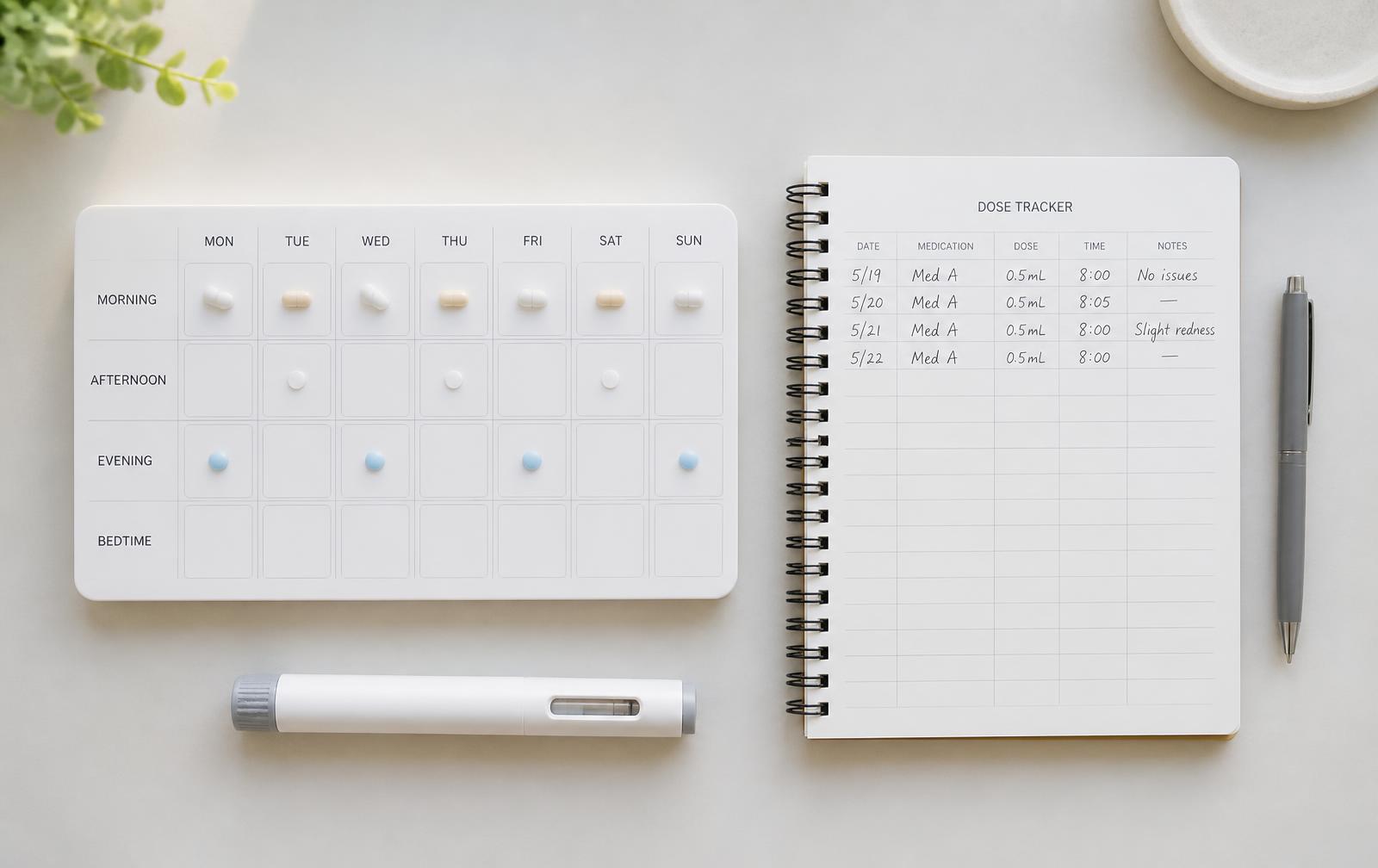
Both medications are started at a sub-therapeutic dose and increased stepwise. The labeled purpose of this escalation is to reduce gastrointestinal reactions, not to reach the maximum dose as fast as possible.
Semaglutide 2.4 mg (Wegovy) labeled escalation — 4 weeks at each step:
| Weeks | Weekly dose |
|---|---|
| 1-4 | 0.25 mg |
| 5-8 | 0.5 mg |
| 9-12 | 1 mg |
| 13-16 | 1.7 mg |
| 17 onward | 2.4 mg (maintenance) |
Tirzepatide (Zepbound) labeled escalation — 2.5 mg for 4 weeks, then 5 mg; increases of 2.5 mg may be made after at least 4 weeks on the current dose:
| Weeks | Weekly dose |
|---|---|
| 1-4 | 2.5 mg (initiation, not for glycemic or weight effect) |
| 5-8 | 5 mg |
| 9-12 | 7.5 mg (if needed) |
| 13-16 | 10 mg (if needed) |
| 17-20 | 12.5 mg (if needed) |
| 21 onward | 15 mg maximum |
Titrating down or pausing. Prescribing information and the published trial protocols describe several standard maneuvers, all of which are decisions for your prescriber:
- 1Extend the interval at the current dose. Both labels permit delaying escalation by four additional weeks if a dose is not tolerated.
- 2Step back down. The Wegovy labeling notes that if a patient cannot tolerate 2.4 mg, the dose may be temporarily decreased to 1.7 mg for up to 4 weeks and then increased again; if 2.4 mg remains intolerable, discontinuation is considered.
- 3Restart lower after a long gap. If more than 2 consecutive weekly doses of semaglutide are missed, the labeling advises resuming at the prior schedule or reinitiating escalation; tirzepatide's labeling addresses missed doses by timing rather than restart, so follow prescriber instructions.
- 4Maintain at a lower effective dose. The trials show meaningful average reductions at intermediate doses (for example -15.0% at tirzepatide 5 mg), so the maximum dose is not required for a clinical effect.
- 5Plan any discontinuation with your provider, knowing the published regain data, and keep nutrition and training habits in place.
Never self-adjust
Dose changes, holds, and stops belong to the licensed clinician who prescribed the medication. Do not split, stack, skip, or double doses on your own, and do not use products from sources outside a licensed pharmacy. MedsRX is not a pharmacy or a medical practice and does not prescribe, dispense, or advise on dosing.
Section 11
Practical Dosing and Lifestyle Tips
The points below are practical strategies that many members and clinicians discuss when starting or continuing a GLP-1 medication. They are not instructions, and any change to timing, splitting, or dosing must be confirmed with your licensed prescriber.
- Do not eat a large meal on the day of your injection, for roughly 3 hours before the injection, or during the first 4 hours afterward. A lighter stomach tends to reduce nausea and reflux.
- Consider taking your dose 1-2 hours before your regular bedtime. This lets the medication begin working while you are fasting during sleep, which many people find easier to tolerate.
- Splitting the weekly dose can be discussed with your prescriber — for example, half on Monday and half on Thursday. Some members, especially on a first-ever dose, report smoother appetite and side-effect control with a split schedule. Do not split or alter the prescribed regimen without clinician approval.
- Prioritize protein at every meal and build the rest of the plate around whole foods. Cut back on added sugars and desserts, which add calories without satiety or nutrition.
- Gastrointestinal side effects usually ease after the first few doses. If heartburn occurs, discuss an over-the-counter option such as famotidine (Pepcid) with your prescriber or pharmacist to make sure it is appropriate for you.
- Use the lowest effective dose. More is not always better, and the goal is steady, sustainable progress rather than rapid escalation. This is a marathon, not a sprint.
Confirm with your prescriber
Timing, splitting, dose holds, and over-the-counter remedies are all prescriber decisions. MedsRX is not a pharmacy or a medical practice and does not prescribe, dispense, or advise on dosing.
Section 12
The Whole-Food Foundation

The published trials for both drugs paired medication with a reduced-calorie diet and increased physical activity in every arm. The Dietary Guidelines for Americans describe a healthy dietary pattern as one built on vegetables, fruits, protein foods, dairy or fortified alternatives, whole grains, and oils, while limiting added sugars, saturated fat, and sodium. Because appetite is markedly reduced on these medications, the practical consequence is that a smaller volume of food has to carry the same protein, vitamins, minerals, and fiber.
Whole foods that fit that pattern:
| Category | Examples |
|---|---|
| Protein foods | Eggs, chicken, turkey, lean beef, pork loin, salmon, tuna, sardines, shrimp, cottage cheese, Greek yogurt, kefir, tofu, tempeh, edamame, lentils, beans |
| Non-starchy vegetables | Broccoli, cauliflower, spinach, kale, arugula, cabbage, Brussels sprouts, zucchini, peppers, asparagus, green beans, mushrooms, tomatoes |
| Fruit | Berries, citrus, apples, pears, kiwi, melon, stone fruit |
| Fats | Olive oil, avocado, olives, nuts, seeds, nut butters without added sugar |
| Minimally processed carbohydrate | Oats, quinoa, brown rice, barley, farro, potatoes, sweet potatoes, winter squash, whole-grain bread |
| Fluids | Water, unsweetened tea and coffee, broth, mineral water |
- Eat protein first at each meal, then vegetables, then the rest — early fullness is common, and the protein is the part hardest to make up later.
- Keep fiber and fluids up. Constipation is among the most commonly reported adverse reactions; the Dietary Guidelines target roughly 25-34 g of fiber per day for adults, from vegetables, legumes, fruit, and whole grains.
- Very large, very high-fat, or heavily fried meals are frequently reported as poorly tolerated when gastric emptying is slowed. Smaller, more frequent meals are a common practical adjustment.
- Prioritize nutrient density: calcium, vitamin D, iron, B12, potassium, and magnesium are easy to under-consume on a small appetite. Discuss any supplementation with your provider.
- Alcohol adds calories without nutrients and can worsen nausea and reflux.
Protein targets in the published literature
The Recommended Dietary Allowance for protein is 0.8 g per kg of body weight per day. Reviews and position statements on weight reduction, including work from the Academy of Nutrition and Dietetics and sports-nutrition consensus statements, describe higher intakes of roughly 1.0-1.6 g/kg/day during energy restriction to help preserve lean mass. For a 200 lb (91 kg) adult that is about 90-145 g per day, often organized as 25-40 g per meal. Protein needs are individualized and must be adjusted by a clinician in kidney disease or other conditions.
Section 13
Weight-Bearing and Resistance Exercise

Because part of the tissue lost during any substantial weight reduction is lean mass and bone mineral, loading the skeleton and the muscles is the standard published counter-measure. The Physical Activity Guidelines for Americans (2nd edition) recommend that adults perform muscle-strengthening activities involving all major muscle groups on 2 or more days per week, plus 150-300 minutes per week of moderate-intensity aerobic activity (or 75-150 minutes vigorous).
- Resistance training: squats, hip hinges and deadlifts, lunges, presses, rows, and carries — machines, dumbbells, barbells, or bands all count. 2-3 sessions per week covering all major muscle groups.
- Weight-bearing activity for bone: walking, hiking, stair climbing, dancing, and jogging load the skeleton in ways that cycling and swimming do not.
- Progressive overload: add small amounts of weight, reps, or sets over time rather than repeating the identical workout indefinitely.
- Protein timing around training and adequate total daily protein are the two nutrition variables most often studied alongside resistance training for lean-mass retention.
- Balance and mobility work reduces fall risk, which matters more as body weight and body composition change quickly.
A simple weekly template
Two full-body resistance sessions (for example Monday and Thursday), each with one lower-body push, one lower-body hinge, one upper-body push, one upper-body pull, and one carry or core movement; 2-4 sets of 6-12 reps. Add 20-40 minutes of walking on most days. Scale everything to your current fitness and any restrictions your clinician has set.
Talk to your clinician first
Get clearance before starting or intensifying an exercise program, particularly with cardiovascular disease, uncontrolled hypertension, diabetes complications, joint disease, or a history of falls.
Section 14
Questions Worth Asking Your Prescriber
- Given my history and medications, is a GLP-1 or dual GIP/GLP-1 agonist appropriate for me at all?
- Which product, which starting dose, and what escalation schedule do you want me on?
- What symptoms should make me call you, and which are expected during escalation?
- Do any of my current prescriptions — insulin, sulfonylureas, blood pressure medication, diuretics, oral contraceptives — need adjusting?
- What protein target, fluid target, and lab monitoring do you recommend for me?
- What is the plan if I plateau, if I cannot tolerate the next step up, or if I want to stop?
- What should I tell an anesthesiologist before any procedure?
Sources
- 1. Wilding JPH et al. Once-Weekly Semaglutide in Adults with Overweight or Obesity (STEP 1). N Engl J Med 2021;384:989-1002.
- 2. Davies M et al. Semaglutide 2.4 mg once a week in adults with overweight or obesity and type 2 diabetes (STEP 2). Lancet 2021;397:971-984.
- 3. Rubino D et al. Effect of Continued Weekly Semaglutide vs Placebo on Weight Loss Maintenance (STEP 4). JAMA 2021;325:1414-1425.
- 4. Wilding JPH et al. Weight regain and cardiometabolic effects after withdrawal of semaglutide (STEP 1 extension). Diabetes Obes Metab 2022;24:1553-1564.
- 5. Lincoff AM et al. Semaglutide and Cardiovascular Outcomes in Obesity without Diabetes (SELECT). N Engl J Med 2023;389:2221-2232.
- 6. Jastreboff AM et al. Tirzepatide Once Weekly for the Treatment of Obesity (SURMOUNT-1). N Engl J Med 2022;387:205-216.
- 7. Garvey WT et al. Tirzepatide once weekly for the treatment of obesity in people with type 2 diabetes (SURMOUNT-2). Lancet 2023;402:613-626.
- 8. Aronne LJ et al. Continued Treatment With Tirzepatide for Maintenance of Weight Reduction (SURMOUNT-4). JAMA 2024;331:38-48.
- 9. Frias JP et al. Tirzepatide versus Semaglutide Once Weekly in Patients with Type 2 Diabetes (SURPASS-2). N Engl J Med 2021;385:503-515.
- 10. Aronne LJ et al. Tirzepatide as Compared with Semaglutide for the Treatment of Obesity (SURMOUNT-5). N Engl J Med 2025.
- 11. Bliddal H et al. Once-Weekly Semaglutide in Persons with Obesity and Knee Osteoarthritis (STEP 9). N Engl J Med 2024;391:1573-1583.
- 12. Packer M et al. Tirzepatide for Heart Failure with Preserved Ejection Fraction and Obesity (SUMMIT). N Engl J Med 2025;392:427-437.
- 13. Malhotra A et al. Tirzepatide for the Treatment of Obstructive Sleep Apnea and Obesity (SURMOUNT-OSA). N Engl J Med 2024;391:1193-1205.
- 14. Loomba R et al. Tirzepatide for Metabolic Dysfunction-Associated Steatohepatitis with Liver Fibrosis. N Engl J Med 2024;391:299-310.
- 15. Perkovic V et al. Effects of Semaglutide on Chronic Kidney Disease in Patients with Type 2 Diabetes (FLOW). N Engl J Med 2024;391:109-121.
- 16. Kosiborod MN et al. Semaglutide in Patients with Heart Failure with Preserved Ejection Fraction and Obesity (STEP-HFpEF). N Engl J Med 2023;389:1069-1084.
- 17. Nicholls SJ et al. Tirzepatide versus dulaglutide in adults with type 2 diabetes and cardiovascular disease (SURPASS-CVOT). Lancet 2025.
- 18. FDA-approved prescribing information: Wegovy (semaglutide), Ozempic (semaglutide), Zepbound (tirzepatide), Mounjaro (tirzepatide).
- 19. U.S. Department of Health and Human Services. Physical Activity Guidelines for Americans, 2nd edition (2018).
- 20. USDA / HHS. Dietary Guidelines for Americans, 2020-2025.
- 21. Rosenstock J et al. Efficacy and Safety of Oral Semaglutide 50 mg vs Placebo and Oral Semaglutide 14 mg on Glycemic Control in Patients With Type 2 Diabetes (PIONEER PLUS). JAMA Intern Med 2024; and related PIONEER trial publications.
Take the whole guide with you
Same content, formatted as a printable MedsRX PDF with sources.